
the-circuit · October 15, 2026 · The Fam
The Yard
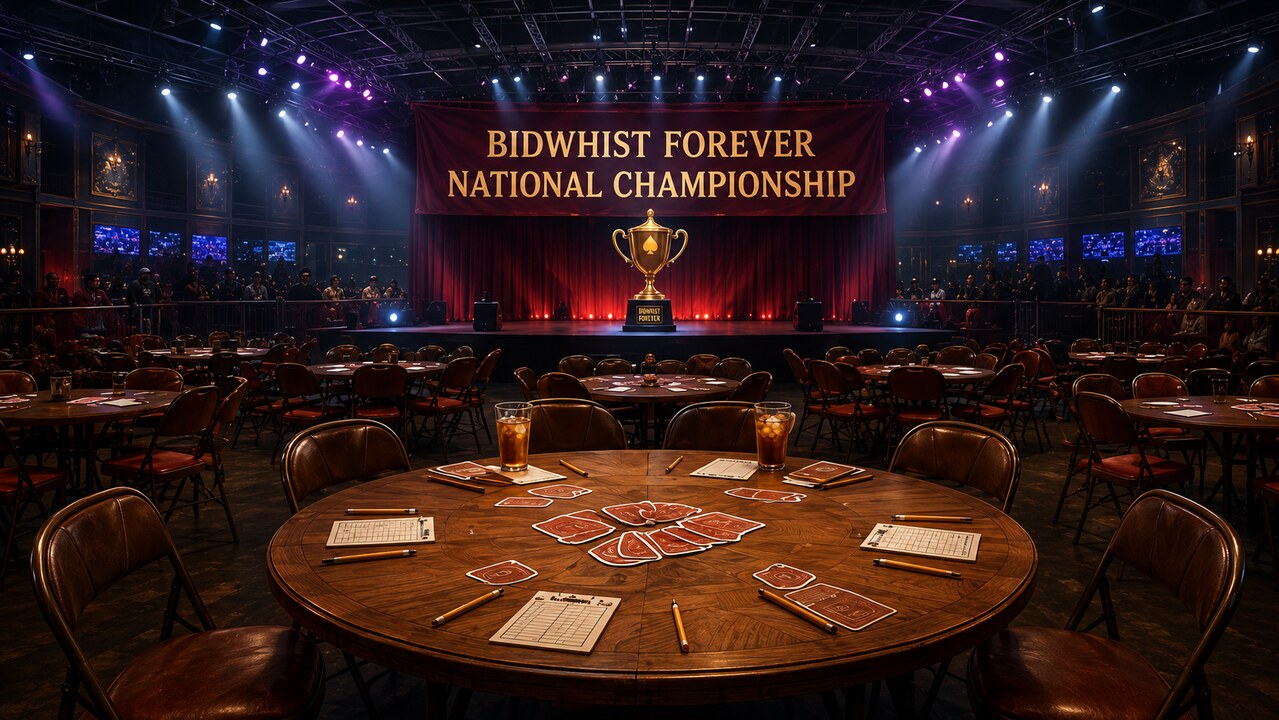
Season One: The Long Ride Home. Episode One put two hundred and eleven invitations in the mail. This is the Saturday they were for.
The 6:52 into Crossvale
The train comes in a little early, which never happens, and Slim is the third man off.
He doesn’t look at the signs. Crossvale station has two exits and he takes the one on the left without slowing down, past the bench, up the ramp, into green and gold. Reggie Carter is at the top of it holding two coffees and has been since six.
“Drove it in four hours,” Reggie says. “You spent two days.”
“I did.”
“Was it worth two days?”
Slim takes the coffee. Somewhere behind them the train lets off its brakes, that long sigh, and for about a second — no longer — the old man stands still and lets it finish.
“Ask me tomorrow,” he says.
The Porter Steps
Freshmen learn on the steps. They have since 1931, because the steps are wide, the stone stays cool, and nobody up there is keeping score.
Alex has a folding table, two decks, and a job: hold the beginner table until one o’clock. She is twenty years old, she is on the Classic committee, and she has played bid whist exactly four times in her life, all of them in the last three weeks, all of them badly.
“Okay,” says the girl across from her. “So say it again.”
Her name is Maya. She came up from Atlanta on a Spelman friend’s car, she is wearing another school’s colors on somebody else’s yard, and she has a notebook out. An actual notebook.
“Uptown is high,” Alex says. “Downtown is low. You call it when you bid.”
“Low meaning —”
“Meaning the two turns into the second-best card in the deck. Ace stays boss. Everything under it flips.”
Maya writes that down. Underlines flips. Then: “How does anybody remember which way it’s going?”
“You just do,” says an old head on the step above them, not looking up. “Second hand.”
“But how, though.”
The old head looks up.
There’s a thing that happens on the steps when somebody asks a real question, and it happened right then: two more people turned around. Maya’s grandmother had four generations of this in her house and never taught her a hand, and when Maya finally called to ask about it, all her grandmother said was you never asked, baby. So now Maya asks. She asks everybody. She has found it works.
By half past ten there are eleven people around a table built for four, and Alex — who came up here to teach and has spent the whole morning learning — is writing in the margins of Maya’s notebook.
The edge of the yard
Preach gets there at 11:40 and stops walking.
Not at the gate. Past the gate, at the place where the walkway gives out and the grass starts, where the Wheel is running a section rehearsal and somebody’s people have set up a tent with a whole steam table under it. Green and gold. A banner with four words on it he’s been reading off letterhead for two years and has never once seen this big.
We carry it forward.
Eighteen years is a long time to build a picture of a place from the outside. He built a good one. It is not this.
“Daddy.”
She’s coming across the grass with the notebook still in her hand.
He does not have a speech. He had one on the bus, and it was a good one, and it’s gone.
“This is a big yard,” he says.
“It’s not, actually. You’ll walk the whole thing in ten minutes.” She stops in front of him. “Hi.”
“Hey, baby.”
“You came.”
“You asked.”
Alex takes his arm, which she has not done since she was small enough to need to, and walks her father onto the campus he has been two years not visiting.
Ten minutes, she said. It takes them forty. Everybody wants to meet him.
Alumni Hall, one o’clock
Denise Holloway runs the brackets off a clipboard and a spreadsheet she printed at seven this morning, and she will tell you — she does tell people, several times — that the spreadsheet is the reason the Classic starts on time and the football game does not.
Thirty-one pairs. One bye. She draws the bye in front of witnesses.
Marcus Cole stands at the back where he always stands, sleeves buttoned, and watches two seats at table nine. He endows them every year. He fills them the same way every year: Denise gives him a list of students who didn’t enter because of the twenty-dollar table fee, and Marcus reads it, and two names come off it, and nobody is ever told which two.
“You could put your name on those chairs,” Denise says, passing. “It’s a nice thing you do.”
“It’s a chair,” Marcus says. “It’s not a plaque.”
Tommy Rivers arrives with the Nashville bus, the speaker, and his mother-in-law, in that order of importance to him and the exact reverse of the order of importance to everyone else. He has been told the playlist is not his today. He is taking it well. He is taking it loudly.
Outside, the Wheel finishes warming up. Inside, thirty-one pairs pick up their cards at the same time, and the sound is like rain starting.
Bracket two
They put Preach and Alex at table six, which is how it goes when one of you is committee and the other one is somebody’s father, and across from them sits a young man from Crossroads A&M named Omar Wells who has already looked at the bracket and knows where he intends to be at seven o’clock.
Alex leans over. “What do I do?”
“Bid what you got.”
“I don’t know what I got.”
“Then bid low and I’ll carry it.”
They win the first one. They shouldn’t have — Alex leads out of turn on the fourth hand and Preach covers it so smoothly that two of the three other players never notice, and the one who notices is Omar, who says nothing, because he is already nine moves out.
They lose the second one. They lose it because Alex, holding a boss card she didn’t know was boss, plays it on a trick they’d already won.
Omar takes the book. Takes two more. Sets them.
Alex looks at the table for a second longer than she means to.
Preach writes the score, and then — gently, the way he does, still writing — says: “You had the deuce. Downtown, that’s the whole world. You spent it on a trick we already had.”
“I lost it for us.”
“You lost a hand for us.” He caps the pen. “Baby, there’s a difference, and everybody at this table but you already knows it.”
Across the felt, Omar Wells does something he doesn’t do at cards: he smiles for a reason that has nothing to do with cards.
“Nobody sits down fluent,” he says, and shuffles.
The Wheel
Four o’clock, the band comes through the hall on its way to the field, because it has come through the hall on its way to the field for ninety-odd years, and the Classic stops dead for ninety seconds while it does.
Quincy is in the sousaphone line.
He hasn’t worn the uniform in eleven years and it does not entirely fit, and the plume is green and gold and a little crooked, and the freshmen on either side of him have been told who he is and are trying very hard not to look. He played two years in the Wheel before Beale Street called: bass drum first, then the horn.
He finds the groove in about four bars. Some things you hold.
When the line clears the doors, Quincy peels off, hands the horn to somebody’s cousin, and walks back to table four still humming it.
Regulars know the hum. Regulars know that when the hum changes key, somebody is about to get set.
It changes key.
Half past seven
By half past seven the hall is down to two tables, then one, and the trophy is out on its stand where everybody can walk past it — the one that goes home by train with whoever wins it, the way it has since it was donated by people who worked those trains.
Slim has not said forty words all day.
The semifinal runs long. Book nine, book ten, and the hand narrows the way they do, until it’s the old man and three other people and a lead he shouldn’t have.
And Slim leads a card nobody in the room expects.
It is the wrong card. It is so plainly the wrong card that a man two tables back says oh out loud, the way you do at a wreck. It gives up a book. It gives up position. It looks, for one whole second, like an old man finally getting old.
Four tricks later, everybody at that table is exactly where Slim needs them to be, and the last three books come home in a row, and it’s over.
Nobody claps right away. That’s the part to notice.
Then Reggie says, to nobody, “Where’d he learn that?”
And nobody answers, because there is exactly one person in Alumni Hall who has seen that lead before, and she is standing by the trophy with her reading glasses in her hand.
Miss Pearl has been in Crossvale since Thursday. She has entered nothing, partnered with no one, and answered every question about her plans with a compliment about your earrings.
She puts the glasses back on. She looks at the pairings card for the final, and then at the old man in the fedora, and she says — to Denise, who is closest, who writes it down because writing things down is what Denise does —
“Baby, put my name in.”
What the table taught
Nobody sits down fluent.
Alex lost a hand on Saturday and learned a card. Maya filled nine pages with other people’s answers. Preach walked onto a yard he’d decided wasn’t for him, and nothing bad happened at all.
Next stop: We Carry It Forward. The final at the Classic — Slim and the hand he was taught on a train and has never once played through, and a woman who chooses her tables sitting down across from him on purpose. Season One closes in November. Get it before the table hears about it: the Circuit Dispatch puts every episode in your inbox a day early — and the Table Sayings card set comes with it.
Who’s at the table this episode: Preach · Cadillac Slim · Miss Pearl · Maya Lincoln · Quincy · Marcus Cole · Denise Holloway · Omar Wells · Reggie Carter · Tommy Rivers — and Alex, who is learning the game at the same speed you are.
The Circuit runs on the real calendar: when homecoming comes for you, it’s coming for them. Pull up a chair — learn the game, or play it.